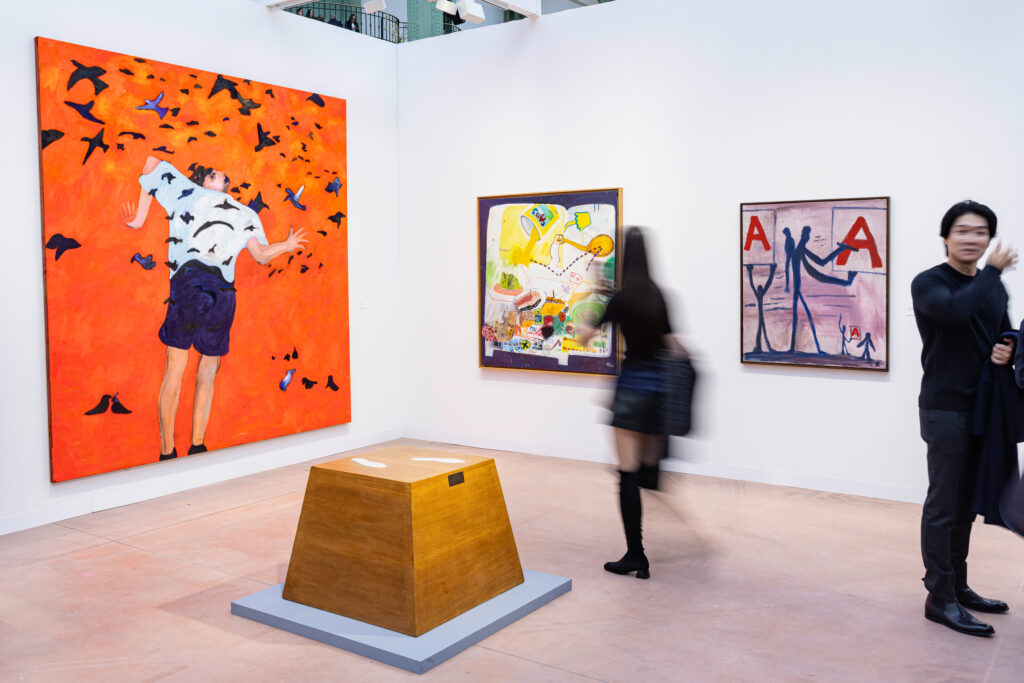
Art Basel Paris: The Epicenter of a Rapidly Evolving Art Scene

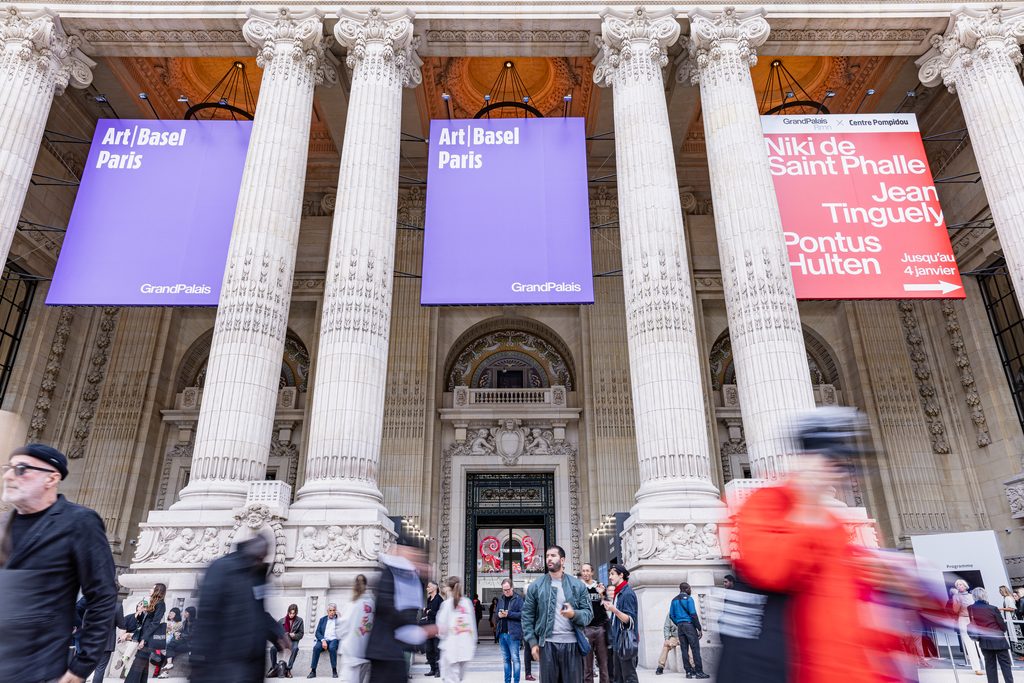
For its fifth edition, taking place from October 23 to 25, 2026, Art Basel Paris returns to the majestic spaces of the Grand Palais. Under the leadership of its new director, Karim Crippa, the international event is rethinking its identity by placing the French capital at the core of its framework.
A Focused and International Offering Beneath the Nave
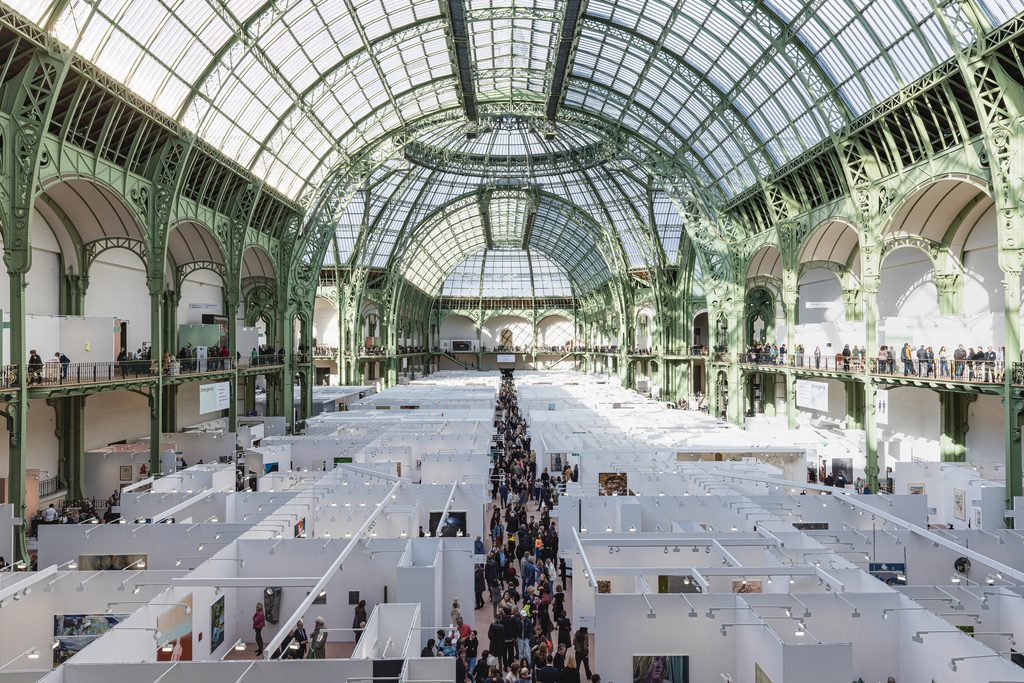
The 2026 edition brings together 211 galleries from 41 countries, 64 of which have a physical footprint in France. This network highlights the vitality of the local scene while maintaining demanding international standards, with the participation of 32 new exhibitors. The spatial layout is structured around three key sectors. Galeries serves as the nerve center of the fair, gathering 183 leading modern and contemporary art dealers. A strong collaborative trend is emerging here, with a record 12 shared booths representing 24 galleries.
Dedicated to emerging creation, the Emergence sector highlights 16 individual projects, favoring installations and transdisciplinary approaches. Finally, the Premise sector has been relocated to the spacious Salon Seine to offer greater visibility, bringing together 12 historically focused curatorial projects aimed at revisiting established narratives in art history.
The “Oh La La!” Initiative
In order to break with the static dimension inherent to traditional art fairs, Art Basel Paris is renewing its cool “Oh La La!” initiative. On Friday and Saturday, galleries are invited to rehang their booths to unveil previously unseen works. Placed this year under the artistic direction of French actress Philippine Leroy-Beaulieu, this creative interlude centers around the theme “Myths and Legends,” inviting an exploration of the spiritual, the unconscious, and the cosmos.
A City-Wide Public Program
The porosity between the fair and the metropolis is embodied in an unprecedented Public Program, accessible for free across nine iconic Parisian venues. Among the most anticipated interventions is filmmaker Alice Diop’s special project at the Palais d’Iéna. Supported by Miu Miu, it offers a curatorial journey blending visual arts, dance, and performance centered on Black female artists. On the Parvis des Droits de l’Homme, visitors will find the installation of three monumental bronze sculptures by British artist Tracey Emin. Additionally, the deployment of artworks along Avenue Winston Churchill connects the Grand and Petit Palais, featuring pieces by Alicja Kwade, Yinka Shonibare, and the late Niki de Saint Phalle.
A Hub for Reflection and Market Dynamics
The Conversations program is taking up residence in the Auditorium of the Grand Palais. It will bring together key decision-makers from the cultural world, such as Christophe Leribault (Louvre) and Laurent Le Bon (Centre Pompidou), to debate the future of museum institutions and the evolution of contemporary creation.
This programmatic ambition is built on strong economic fundamentals. With $4.5 billion in sales in 2025, France captures 8% of the global art market by value and over half of the European Union’s market. By leaning on the rich cultural season of Parisian institutions—marked by retrospectives dedicated to Louise Bourgeois, Mary Cassatt, and Kurt Schwitters—Art Basel Paris 2026 transcends the simple status of a commercial event to establish itself as an essential institutional rendez-vous.