Brigitte Bardot: The Dark Light

The actress passed away at the age of 91, more than half a century after ending her career. Yet the icon also sparked controversy with her divisive and shocking remarks. Who is the woman behind the heroine of the masterpiece ‘And God Created Woman’?
Brigitte Bardot (1934–2025) long held that rare, and costly, privilege of being both a face and an era. She was described as a “liberation” in a gingham skirt, a tremor in social mores, a body that became a language. And, later, as a voice that wounds. Her entire trajectory exists within this chiaroscuro: a figure of light, crafted by cinema and photography, who chose the shadows to save herself. Only to utter words there that led to her fall.
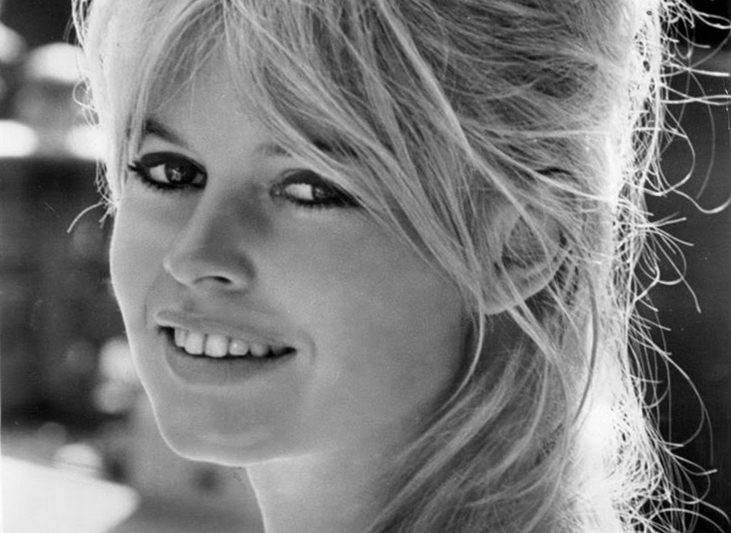
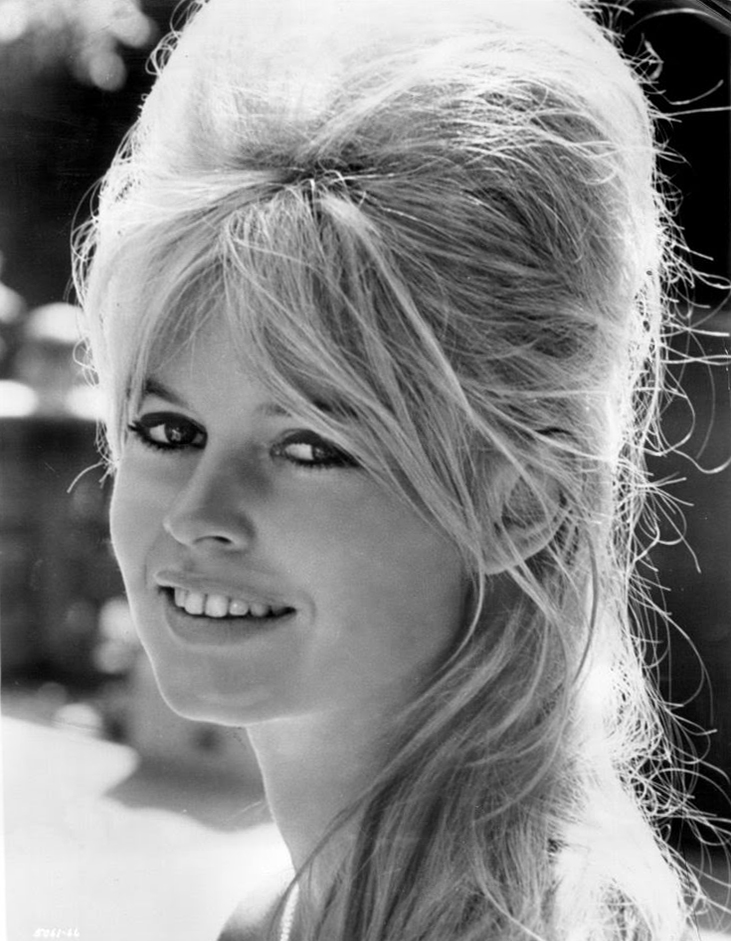
Her legend was born of a scandal mastered by art. And God… Created Woman (Roger Vadim, 1956) did more than just reveal an actress: the film exported a myth, that of a young woman whose desire was no longer an undertone but a driving force. The world discovered “BB” as a signifier, a sensuality that was less sophisticated than it was frontal, almost insolent, breaking with the polished eroticism of the pre-war era. The press went wild, her look became a phenomenon (the hair, the ballet flats, the allure), and Saint-Tropez ceased to be a mere backdrop, becoming a proper noun in the collective imagination.
Yet what is striking when revisiting her story is the immediate underside of this glorification: Bardot never seemed to “inhabit” her celebrity with comfort. Accounts agree on the violence of the public gaze and the exhaustion of being a continuous image, leading to episodes of distress that accompanied this pressure. Reuters explicitly recalls this, citing her “personal turmoil” and the difficulty of enduring fame.
This fragility takes nothing away from her magnetism. In Bardot, the icon and the human being do not overlap; they rub against, grate upon, and contradict one another.
In cinema, this contradiction became material. She filmed extensively, sometimes unevenly, but her presence was often enough to shift a movie’s center of gravity. When Godard filmed her in Contempt (Le Mépris, 1963), he already captured her as an object of projection, desired, commented upon, and yet elusive: a woman escaping the narrative others sought to write for her. The British Film Institute, in its tribute, emphasizes this “scrutinised celebrity” and the way her image redefined female freedom on screen while surrendering her to permanent surveillance.
Then came the most anti-mythic act possible: she stopped. In 1973, at the age of 39, she quit cinema and permanently withdrew from the media spotlight. This departure, far from being a whim, resembled an emergency exit: an absolute refusal to be available.
A Second Destiny: The Animal Cause
This is where the light changes source. Bardot no longer sought to seduce. She sought to be effective. Her second destiny, the one closest to her heart, was built on the animal cause. A long-time activist, she gave this commitment a structure by founding the Brigitte Bardot Foundation in 1986, which became a French NGO active in protecting domestic and wild animals, rescue, awareness, and advocacy.
She reappeared in images with the power of icons: in 1977, she traveled to Canada to denounce the hunting of baby seals. A gesture that married emotion, symbol, and media strategy. The foundation itself documents this episode as a major point of origin for her struggle.
In this luminous part of her life, Bardot impressed through one thing: constancy. Whether one approved of her methods or not, she transformed her celebrity into leverage, and her withdrawal into discipline.
And Enigmatic Figure
And yet, the chiaroscuro returns. Harsher, more brittle. From the 1990s and 2000s onwards, Bardot became a polarizing figure for her stances, particularly on immigration and Islam, and was convicted several times for remarks deemed racist or for “incitement to racial hatred.” Le Monde recalls, for example, a 2004 conviction related to writings targeting immigrants and Muslims, followed by another in 2008, presented as her fifth conviction in eleven years.
Reuters summarizes this shift with the phrase that defines her later years: an admirable activist for animals, but “divisive” in politics, associated with far-right positions and these legal convictions.
This is where Bardot disturbs more deeply than a simple “star gone off the rails.” Because the internal logic seems the same on both sides: a way of thinking in absolutes, choosing a side without nuance, a penchant for definitive anger. In the best of cases, this produced tireless moral energy for those who cannot speak (animals). In the worst, it produced generalizations, stigmatization, and words that fractured. Leading all the way to the courtroom.
She can therefore be viewed as a pure, and extremely interesting, French paradox: a symbol of emancipation without a program, a revolution of images without theoretical discourse, then a passionate activist without diplomacy, and finally a polemicist without safeguards. Her mythology was made of sunlight (youth, style, the idea of immediate freedom). Her reality, however, was more nocturnal: solitude, mistrust of the world, and the temptation to transform complexity into a verdict.
When she passed away in December 2025, the tributes and the reservations overlapped exactly like her life: admiration for her cultural imprint, gratitude for her fight for animals, and a persistent unease regarding certain positions.
This is perhaps the truest definition of Bardot: a woman who became a myth despite herself. And remained human, which is to say contradictory, even in that which made her unacceptable to some.
Tom Connan